

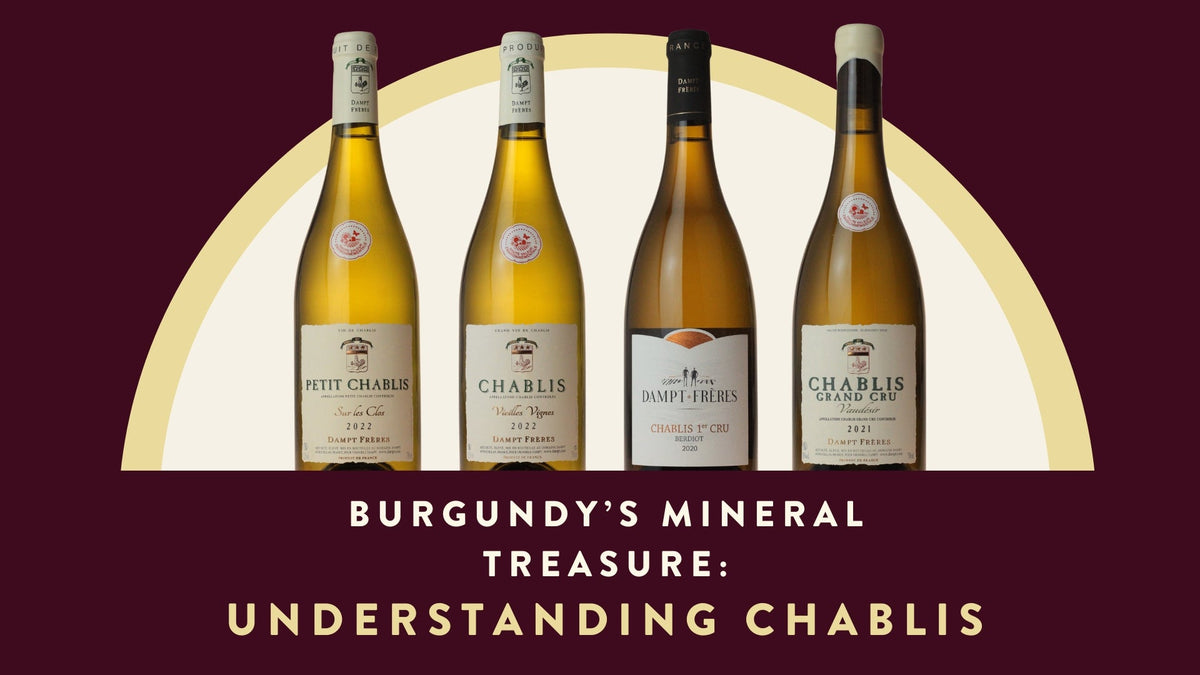
Burgundy's Mineral Treasure: Understanding Chablis

Chablis has a unique place in the world of wine. But it is easy to get confused as to what makes it so different, why it is special, and the various types of Chablis available. Let’s break it down.
What is Chablis?
Chablis is a white wine produced in and around the French town of Chablis, in northern Burgundy. It is always made from the Chardonnay grape, but it’s very different from the richer, buttery Chardonnays of southern Burgundy. Here, the climate is cooler, and the soil is composed of limestone and fossilised oyster shells (called Kimmeridgian soil). This results in a crisp, lean, almost flinty wine, with a lovely acidity and minerality. It’s a style that pairs beautifully with seafood, light poultry, or simply enjoyed on its own.
Why is Chablis Different from Other Burgundies?
Although technically part of Burgundy, Chablis style got famous because it is so distinct. The combination of cool climate, Kimmeridgian limestone soils, and careful winemaking gives it a character that is more refined and mineral than many other white Burgundies. While southern Burgundy Chardonnays may be rich and opulent, Chablis is all about finesse, structure, and purity. Chablis is traditionally not oaked, but some finer examples can be aged using old oak barrels, to elevate the structure and complexity.
Understanding Chablis Appellations
You can find four levels of Chablis wines, which reflects various quality and origin:
Petit Chablis
The lightest and freshest, made from grapes grown on the outskirts of the region. A good start if you are wondering if Chablis is for you. These wines are crisp, easy-drinking, and perfect for drinking on its own should you wish to do so.
Chablis
The standard Chablis appellation comes from the heart of the region. Expect more depth, minerality, and character than Petit Chablis, while still maintaining freshness. You can find notes of green fruit and a bit of salinity.
Chablis Premier Cru
Made from carefully chosen vineyards with ideal conditions, Premier Cru wines show greater complexity, structure, deeper notes of stone fruit and aging potential. Each vineyard (or “climat”) has its own personality, and the wines reflect that subtle difference beautifully. Some Premier Cru can be oaked very lightly.
Chablis Grand Cru
Made with the finest grapes. There are only seven Grand Cru vineyards, on sunny slopes along the Serein River. These wines are full-bodied, intensely mineral, and capable of aging gracefully for many years, yet they retain the signature Chablis minerality. They can have aromas of honey and spice, and like some Premier Cru a touch of oak.
Chablis Tasting & Pairing Guide

| Appellation | Typical Flavours | Food Pairings | Serve At |
|---|---|---|---|
| Petit Chablis | Light citrus, green apple, subtle mineral | Salads, Seafood: Fresh oysters, grilled fish | 8–10°C |
| Chablis | Lemon, flint, white flowers | Shellfish, chicken, soft cheeses | 10–12°C |
| Premier Cru | Ripe citrus, subtle honey, minerality | Lobster, crab, roasted poultry | 12–14°C |
| Grand Cru | Lemon zest, almond, wet stone, layered complexity | Fine seafood, creamy fish dishes, aged cheeses, foie gras, duck | 12–14°C, decant optional |
Our Chablis Selection
At Hourlier Wines, we work with Dampt Frères, a duo of passionate and honest brothers, whose precision captures perfectly the minerality and purity of Chablis. Vintage after vintage, they produce a wide range of Chablis appellations and styles, including the finest Chablis Grands Crus. Their commitment to respect the historic and fragile land they work on, along with its biodiversity, which they call ‘lutte raisonnée’, has been part of their ethos since they started working the vine. They are now holding the label ‘Haute Valeur Environnementale’ and have converted part of the vineyard into organic winemaking.

We believe wine should be approachable, even when it comes from complex regions like Chablis. Whether you are discovering it for the first time or deepening your exploration of Burgundy, we would be happy to help should you have any questions.

Top 10 French White Wines for 2026
After our top 10 French Red Wines, the team at Hourlier Wines has prepared a selection of promising...

Top 10 French Red Wines for 2026
With the new year, we invite you to discover new additions to the range at Hourlier Wines, as...

Domaine Gilles Guerrin: A Family Story in the Heart of Burgundy
In the Mâconnais region of Burgundy, Domaine Gilles Guerrin is a family story built over generations, carried forward...