Tasting notes

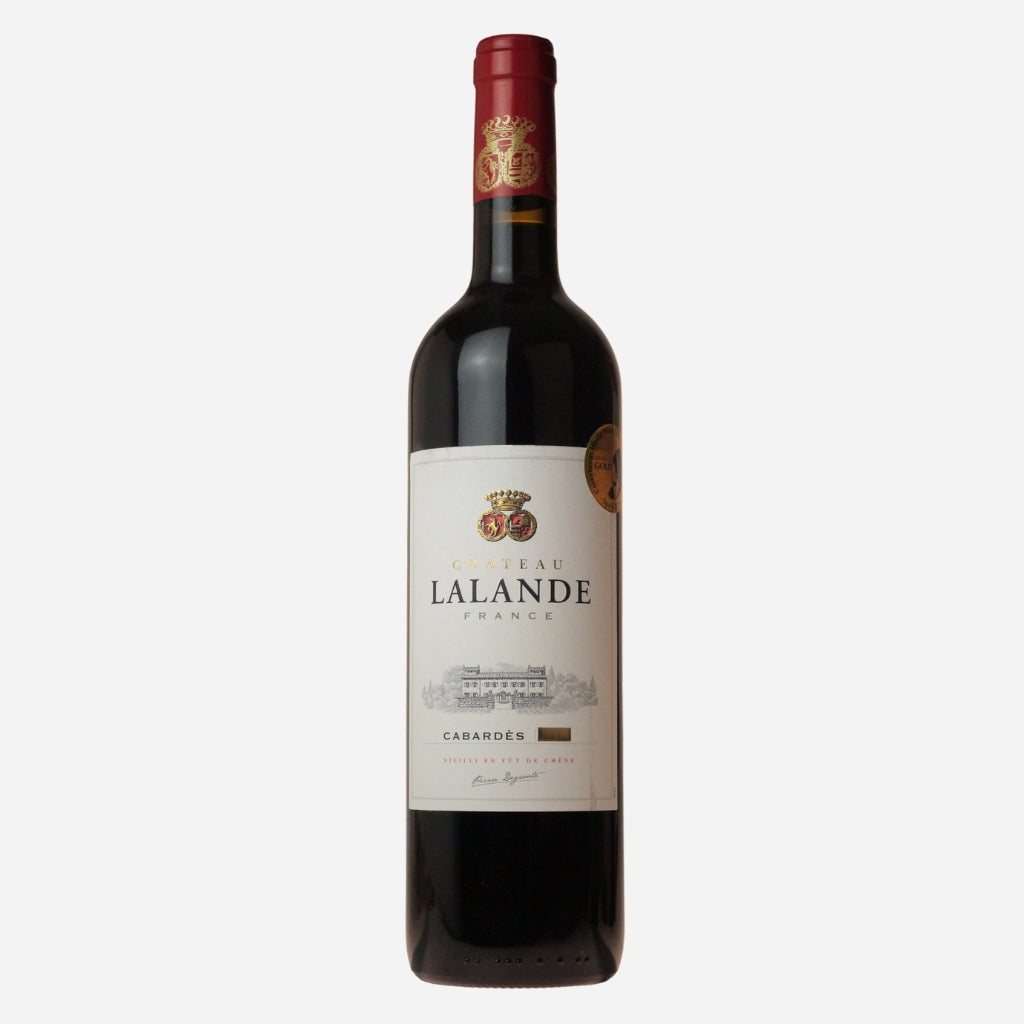
Concentrated in the mouth, showing a good balance between blackcurrant fruits and length, blended between Mediterranean and Atlantic grapes. The smoky character is evident on the palate, firmly grounded by fine tannins and notes of undergrowth and bay leaf. The balance of alcohol and freshness carries the flavours through to an elegant finish.

Taste profile

BodyFull
SweetnessDry
AcidityFresh
TanninMedium

Pairs with

Wine information

Vintage
2019
Region
Languedoc
Appellation
Cabardes
Style
Red
Producer
Chateau Lalande
Grapes
Cabernet SauvignonSyrahMerlotGrenache Noir
Keeping
Drink within 7 years of bottling.
Bottle
75cl
Alcohol
13.0%

Winemaking. Green harvesting (one in July and one in August), fermentation under temperature control, regular punch-downs. 60% in stainless steel tanks for 6 months and 40% in French oak barrels.

Tasting sheet (PDF) →
Region and Appellation Information
Languedoc

Region – Languedoc

The Languedoc, though often referred to loosely as a single entity, is not a wine appellation in its own right but a broad Mediterranean region encompassing a wealth of individual appellations. Traditionally, labels carried the specific titles of Languedoc AOC and its numerous sub-regions, from Corbières and Minervois to Pic Saint-Loup and Faugères. Since January 2016, the historic Languedoc-Roussillon and Midi-Pyrénées regions have been administratively merged into Occitanie, France's newest region. Stretching along the coast from the Rhône towards the Spanish border, the Languedoc is one of France's largest and most diverse wine-producing areas.

Appellation – Cabardes

A small, distinctive appellation in the Languedoc, set in the foothills of the Montagne Noire directly north of the walled city of Carcassonne. Its defining feature is a rare position on the divide between two climates: uniquely in France, its wines must blend both Atlantic grapes (Cabernet Sauvignon, Cabernet Franc, Merlot) and Mediterranean ones (Syrah, Grenache, Cinsault). Around 80% of production is red, with the remainder a rich, bold rosé made by saignée, across some 540 hectares of rocky, gravelly soils. Though winegrowing here dates back to Roman times, the AOC is young, established in 1999, and increasingly prized as the best of both worlds.